


 |
The fourth generation S-Monovette® combines all the advantages of modern blood collection systems.The closed blood collection system, consisting of a syringe-tube and a needle, has been significantly improved in recent years. The blood collection process has been optimized to increase system reliability and reduce the risk of infection for medical staff and patients. Already proven system advantages such as a screw cap to prevent aerosol effects, graduations for optical blood volume control and impact resistance remain important features of the S-Monovette®.
|
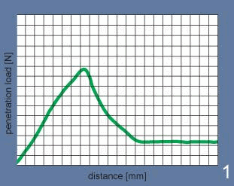 |
The curve shows the load and glide optimal vein puncture with the S-Monovette® needle. | |
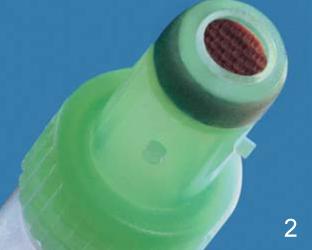 |
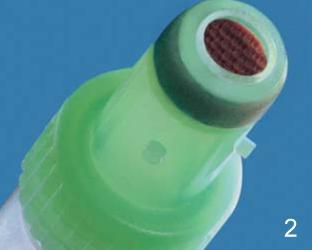
The deep-seated membrane in the test tube prevents contact with the punctured surface, which guarantees safety and reduces the risk of infection for medical staff during the blood collection process. |
|
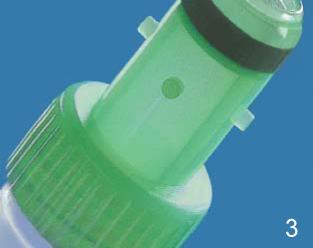 |
A special mechanism for fixation the needle on the test tube reduces pain in the patient. | |
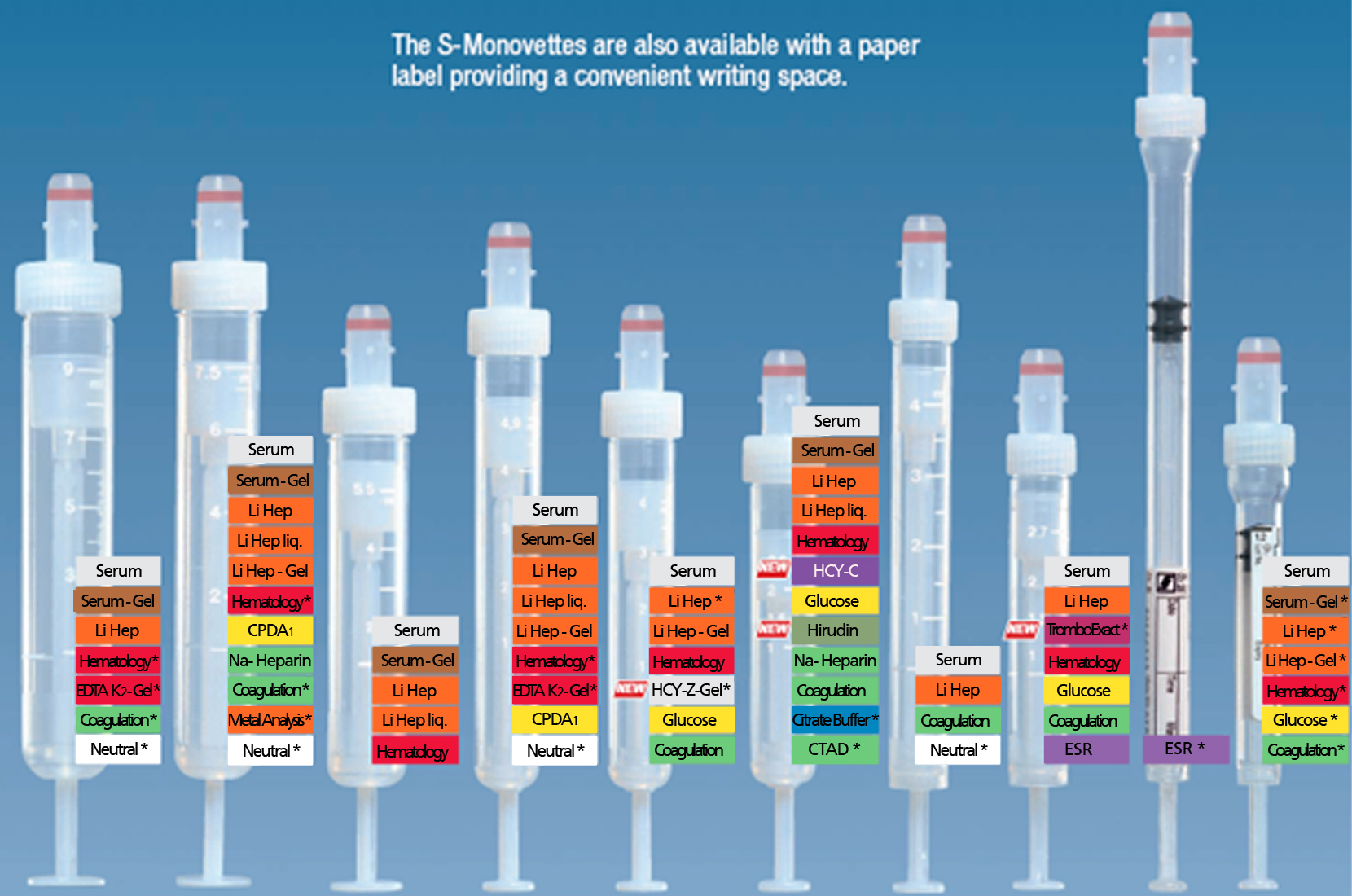
S-Monovette® are available with both graduation and label.
The S-Monovette® is a closed venous blood collection system that provides the user with a choice of blood collection techniques depending on the individual patient or the condition of their veins. This system allows the use of aspiration or vacuum blood sampling techniques, or a combination of the advantages of both methods.
As a rule, the aspiration (syringe) technique of taking blood is used when taking a blood sample from patients with “difficult” veins, for example, in pediatrics, gerontology, oncology.